

eSourcing still carries a lot of misconceptions. Myths, especially around e-auctions, have slowed adoption and created confusion about what digital sourcing solutions actually do.
eSourcing can seem like a mysterious realm where deals happen with a single click and savings magically appear. In reality, it’s both more complex and far more rewarding. It is a powerful strategic process when done right.
This article cuts through the noise. It explains what eSourcing really is, challenges outdated beliefs, and walks you through the steps to build a strategy that drives results.
What is eSourcing?
eSourcing is a structured approach to managing sourcing events using digital tools. By leveraging technology, procurement teams create a repeatable, transparent process that helps work smarter.
With the right setup, organizations can manage supplier data, run RFx events (RFI, RFP, RFQ), host eAuctions, and track performance in one place. These tools speed up workflows, increase visibility, and help identify hidden costs.
But tools alone aren’t enough. True value comes from how you structure your sourcing process, define rules, and evaluate suppliers. That’s where a solid strategy makes all the difference.
Importance of the Right eSourcing Strategy
A clear strategy turns eSourcing from a digital toolset into an actionable business asset. Without one, teams often run disconnected events, chase short-term savings, or overlook bigger risks.
A strong eSourcing strategy helps you:
- Structure sourcing activities.
- Align sourcing with business goals.
- Reduce supplier and delivery risks.
- Boost supplier engagement through clear and fair processes.
- Support compliance with internal policies and external regulatory requirements.
It gives structure, clarity, and purpose to every sourcing initiative.
The eSourcing Process Framework
A structured eSourcing process helps your team stay focused and drive better outcomes. Here’s how a typical cycle unfolds, from planning to performance tracking:
- Analyze Spend and Suppliers. Start by reviewing where your money goes. Group categories, check contract coverage, and assess supplier performance. This gives you a baseline for smarter decisions.
- Define Requirements and Goals. Set clear sourcing objectives. What do you need, when, and under what terms? Define must-haves and nice-to-haves, plus the KPIs you'll track.
- Choose the Right Format. Select the right eSourcing method. Whether it’s an RFQ or eAuction, consider deal complexity and timeframes.
- Launch the Event. Prepare documentation and invite qualified suppliers. Use predefined templates and scoring rules to keep the process fast and fair.
- Evaluate and Score. Review bids using both price and non-price factors. Apply scoring models or evaluation matrices to ensure consistent and objective supplier selection.
- Negotiate and Award. Shortlist top suppliers, negotiate terms if needed, and finalize the award. Document everything in the system for easy audits, contract management, and reporting.
- Track Performance. Monitor delivery, quality, and cost against expectations. Use supplier scorecards and feedback to improve future sourcing cycles.
Common Myths about eSourcing
Despite its advantages, eSourcing is still misunderstood. Many companies hesitate to adopt sourcing software because of outdated beliefs about cost, complexity, or supplier readiness. These misconceptions block progress and keep teams stuck in outdated paper trail practices. Let’s clear up the most common ones.
1. eSourcing is Just About Getting the Lowest Price
One of the most persistent myths is that electronic sourcing is only about driving prices down. While cost savings are a big benefit, focusing solely on the lowest price misses the bigger strategic value.
For example, modern RFQ solutions allow for transformational bidding, where multiple parameters, such as quality, service level, and delivery times, are included. The challenge for procurement is defining how to weigh these parameters. It can be a complex exercise, but often a very useful one, as it forces you to consider the total cost.
As maturity with eSourcing grows, so does the ability to use non-price parameters in value models. In some cases, price may even take a back seat to better terms or other factors critical for efficient strategic sourcing.
The key is to structure your sourcing process so suppliers are evaluated fairly before negotiation.
2. eSourcing is Only for Large Organizations
Another misconception is that eSourcing tools are only suitable for big companies with large budgets and complex purchasing needs. In reality, businesses of all sizes can benefit.
Small and medium-sized businesses (SMBs) use software to level the playing field, reach more potential suppliers, and compete more effectively.
For example, Team Procure is an integrated platform with a straightforward RFQ module that helps SMBs maximize their savings with targeted negotiations. Procurement professionals invite suppliers to bid on products and services, schedule tenders, and compare offers using an evaluation matrix. Additionally, users can easily convert RFQs to purchase orders with a push of a button — as simple as that.
With so many eSourcing solutions available, you can choose one that adapts to your specific sourcing needs.
3. Most Vendors are Not Ready for eSourcing & Digital Submissions
Another common concern about eSourcing is that suppliers won’t adopt new processes or technology.
As a matter of fact, eSourcing is no longer ‘new’ for many vendors. Research from the Hackett Group shows eSourcing software is among the solutions businesses are increasingly adopting:

It's fair to assume that the number of suppliers experienced with digital platforms continues to grow each year. This bodes well for a stress-free transition to digital submissions within a unified procurement software.
4. eSourcing Replaces Relationship Building
Some fear that sourcing software undermines the relationship-building aspect of procurement. In truth, eSourcing can actually enhance them by making communication clearer and more consistent.
The structured nature of digital tools ensures all suppliers are treated fairly, which fosters trust. And by automating routine tasks, procurement teams have more time for building stronger partnerships with top-tier suppliers.
5. eSourcing Implementation Brings Disruptions
It’s natural to worry that new systems will complicate processes. But clinging to a “no-change” mindset often creates bigger risks.
eSourcing brings simplicity and structure to evaluations. Instead of juggling emails, paper, and spreadsheets, you have a single online platform for all documents and scorecards. This minimizes the risk of lost data and errors, freeing specialists to focus on what matters: applying their expertise to select the best suppliers.
Benefits of a Proper eSourcing Approach
When teams follow a structured process, eSourcing becomes a high-impact driver of results. Here is what you unlock when you run it right:
Efficiency and Speed
eSourcing software speeds things up by automating tasks like data collection, bid comparison, and performance evaluation. With these tedious tasks offloaded, teams can dedicate more time to strategic decisions that drive progress.
The speed of eSourcing shortens time-to-market, giving organizations an edge over competitors.
Strategic Value
As mentioned, eSourcing is beyond mere cost-cutting; it is about strategy. With built-in data analytics, organizations gain valuable insights that support smarter decisions.
Whether it’s spotting trends, monitoring procurement KPIs, or assessing risks, e-sourcing software helps in shaping strategies aligned with business objectives.
Seamless Supply Chain
eSourcing serves as a connector across your supply chain. By optimizing sourcing processes and building long-term partnerships with preferred suppliers, you can ensure a steady flow of goods and services.
eSourcing tools also improve the flow of information and transactions, so every link in the chain stays connected and optimized.
Choosing the Right e-Sourcing Format
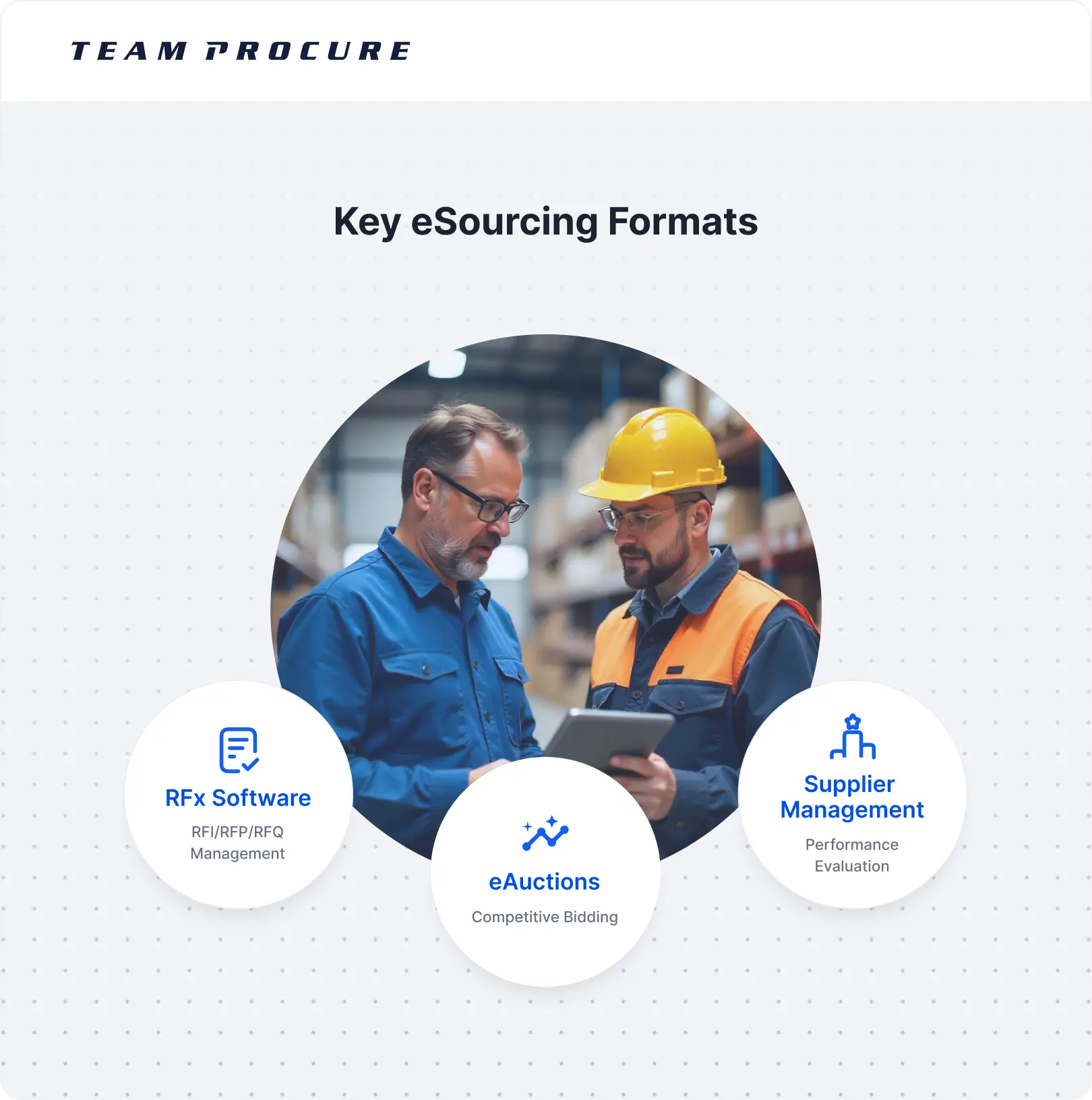
Not every sourcing event needs the same approach. The right format depends on whether you’re exploring the market, comparing offers, or pushing for the best price.
RFx Tools (RFI, RFP, RFQ)
Use RFx when you need structure. Whether you're gathering supplier info (RFI), collecting proposals (RFP), or requesting pricing (RFQ), these tools keep everything organized. They work best when specs are clear, multiple suppliers are involved, and decisions depend on more than just cost. Built-in scoring lets you compare responses fairly and quickly.
eAuctions
Use eAuctions when price is the main driver, and you have several qualified vendors. This format pushes real-time competition and often delivers pricing in a short window. It’s ideal for high-volume categories where suppliers can bid confidently. It works best when suppliers trust the process.
Supplier Management Tools
Use these tools to build and maintain your supplier base. They help track performance, manage contracts, collect documentation, and monitor compliance. Examples include supplier portals for onboarding, evaluation features for tracking service levels, and contract management tools.
While not standalone sourcing solutions, they complement your platform and strengthen decision-making with cleaner data and better visibility.
eSourcing Done Right: Preparing Your Team for Success
Rolling out eSourcing is more than picking a tool. It takes planning, clear roles, and a solid process. Follow these steps to set your team up for success:
Analyze Spend & Supplier Base
Map where your money goes by category, supplier, and department. Look for overlaps, tail spend, and contracts that need review. This step gives you visibility and shows where you can consolidate, renegotiate, or bring more spend under management.
Define Goals & KPIs
Set clear targets before launching any sourcing event. Are you optimizing for cost, speed, quality, risk, or a mix? Choose two to three KPIs tied directly to business goals, as good sourcing starts with alignment. When everyone knows what success looks like, decisions move faster and results are easier to measure.
Select Appropriate eSourcing Tools
Don’t just buy features, but choose what fits your process. The right platform supports your workflows, integrates with your stack, and scales with your team. Look for ease of use, RFx flexibility, reporting tools, and supplier management features. If the system feels too complicated, adoption will stall.
Pilot & Roll Out
Start small. Run one event with a limited scope: one category, one region, one team. Track how it performs. Use the pilot to test workflows, fix friction points, and build confidence across stakeholders. A smooth rollout starts with a dry run.
Train Team & Suppliers
Train internal users on how to set up and run events. Brief suppliers on what to expect and how to respond. The smoother the onboarding, the higher the participation, and the better the outcomes.
Monitor Performance & Refine
After rollout, track how sourcing actually performs. Watch cycle times, bid quality, supplier participation, and savings. Use that data to improve. Phase out what slows you down and build on what works. Update the process as your sourcing needs evolve.
Elevate Your eSourcing Strategy with Team Procure
The next evolution of the Team Procure platform makes supplier and sourcing management smarter, faster, and more data-driven. The upcoming release introduces new tools that give procurement teams more control and fewer manual steps.
Supplier Performance Management
Track everything in one place: from contracts and spend to delivery times and performance scores. The new Supplier Evaluation functionality includes:
- Custom Scorecards: Set your own criteria per supplier category, create templates, and track ratings over time.
- On-Time Delivery Rates: Measure supplier reliability and reduce late deliveries.
- Lead Time Insights: Compare how long suppliers take to fulfill orders.
- Delay Tracking: Monitor average delays to fine-tune planning and reduce risk.
Smarter Supplier Onboarding
Supplier Portal streamlines onboarding and gives suppliers a dedicated space to register, submit documents, and stay compliant.
- Automated Invitations: Speed up registration with direct links.
- Approval Workflows: Keep full control over who gets onboarded.
- Custom Fields: Collect banking, certification, and compliance data.
Onboarding becomes faster, cleaner, and fully auditable.
RFx + Scoring = Better Events
Our upcoming RFx module is designed to handle the full process, from data collection to bidding rounds. Compare supplier pricing and response times, then feed that data into performance evaluations. Each event delivers you quotes and insights that make future sourcing cycles smarter.

Need Enterprise Sourcing Power? Meet SourceBid.
For global teams with more complex needs, SourceBid extends these capabilities to an enterprise scale. Run large-scale RFQs and eAuctions, manage international supplier networks, and build custom workflows.
SourceBid is built for strategic sourcing teams that need utmost flexibility, depth, and control.
Wrapping Up: the Winning Edge of eSourcing
A well-executed eSourcing strategy delivers more than savings. It shortens sourcing cycles, improves supplier visibility, and adds structure to every decision. With the right tools and a clear process, your team moves faster, negotiates smarter, and manages risk with confidence.
There’s no need to rely on spreadsheets, emails, and manual follow-ups. And the goal isn’t to replace people; it’s to give them more efficient ways to work.
Team Procure helps turn every sourcing event into a data-backed process that drives results. Schedule a live demo today and see how your team can start faster, work leaner, and source with clarity.

